
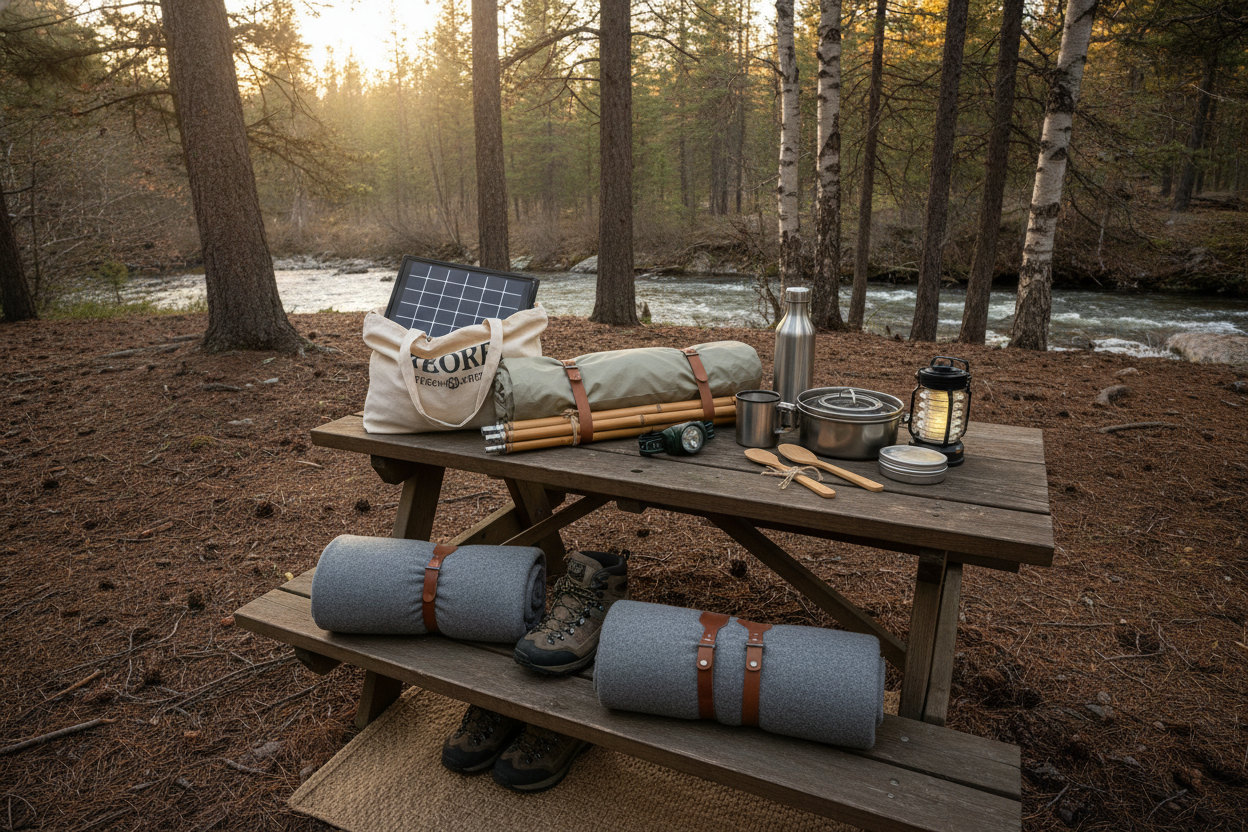
Sustainable camping starts with choosing gear that lasts. A durable tent, reusable cook set, and repairable clothing often outperform cheaper items that need frequent replacement. When you buy less but buy better, you save money over time and reduce waste. It is also worth looking for products made with recycled materials or brands that clearly explain their environmental standards.
At camp, small habits make a big difference. Use refillable water containers, pack reusable utensils, and avoid single-use packaging whenever possible. Store food securely so it does not attract wildlife, and clean up thoroughly before you leave. Even camp routines like using a compact stove instead of open-fire cooking can reduce impact in sensitive areas. The point is not to be perfect; it is to make thoughtful choices that fit the place you are visiting.
Sustainable camping also includes care for the land itself. Pitch your tent on durable surfaces, respect fire restrictions, and leave natural materials where they belong. When campers choose low-impact practices, they help preserve the experience for future visitors. A thoughtful campsite is quieter, cleaner, and easier to enjoy, which makes the whole trip feel more intentional from the first setup to the final pack-out.
Leave a Reply