
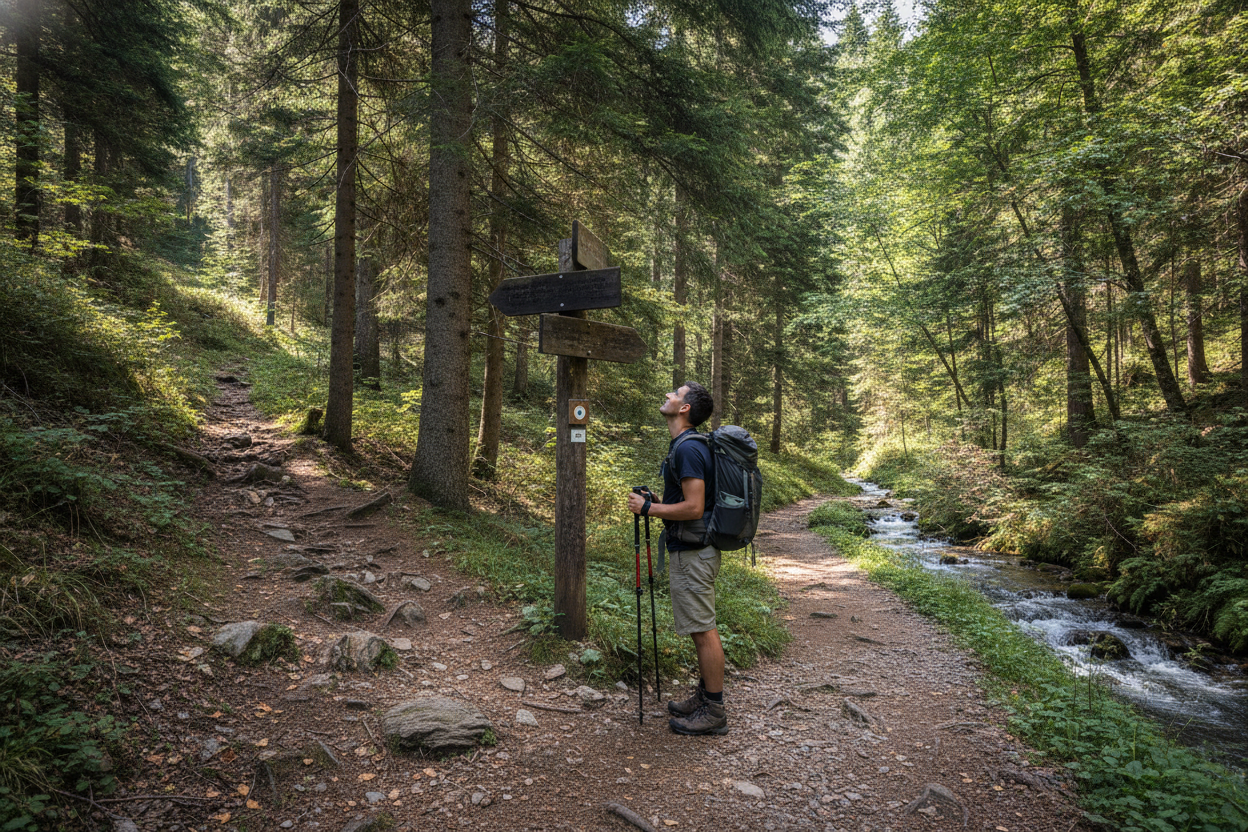
Trail signs are there to help you move safely and confidently through the outdoors, but only if you know how to read them. Start by noticing the color, shape, and placement of markers. In many systems, painted blazes or posted signs indicate the main route, side trails, or special rules for the area. A quick pause at each junction can prevent confusion later in the hike.
Reading signs is about more than spotting arrows. Pay attention to distances, elevation notes, and symbols for closures, wildlife areas, or shared-use sections. Some trails are marked clearly, while others rely on occasional signs and painted blazes. When signage is limited, combine what you see with a map or navigation app so you can confirm your direction. This habit is especially useful in dense forest, rocky terrain, or unfamiliar park systems.
If a sign is missing or damaged, do not guess too quickly. Stop, compare landmarks, and retrace your steps if needed. Trail markers are part of a larger safety system, and learning how to interpret them helps you stay oriented while reducing wear from wrong turns. With practice, reading trail signs becomes second nature and makes every outing feel more relaxed.
Leave a Reply