
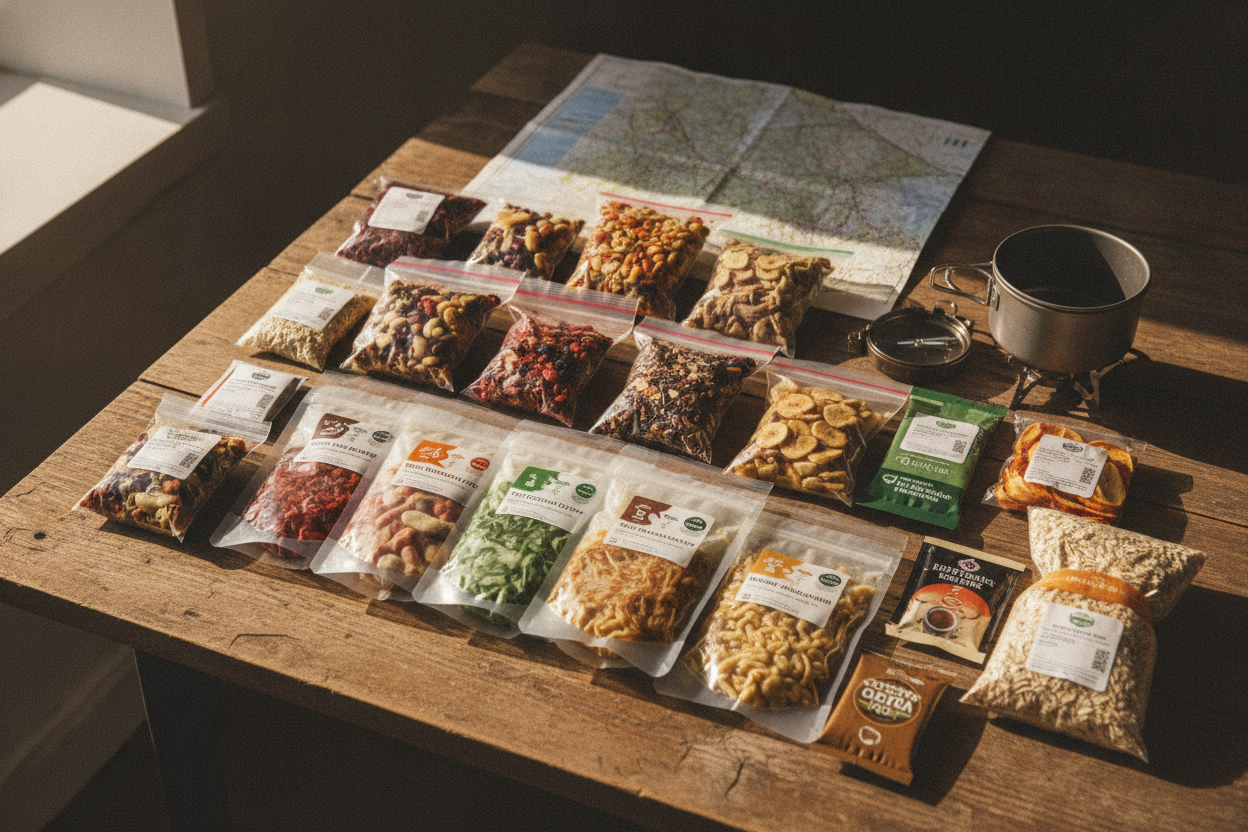
Backpacking meals should be simple, lightweight, and reliable. The goal is to carry enough calories without adding unnecessary bulk. Start by planning meals around familiar foods that store well and cook quickly. Oatmeal, dehydrated dinners, nut butter, tortillas, dried fruit, and energy snacks are popular choices because they pack efficiently and keep preparation time low.
Balance matters when you are hiking day after day. Meals should combine carbohydrates for quick energy, protein for recovery, and healthy fats for staying power. It helps to test your food at home before a trip so you know whether the portions are satisfying and easy to prepare. If you rely on a stove, choose meals that work with the fuel and cookware you already own.
Organization also makes a difference. Packing meals by day or by meal can save time at camp and prevent you from digging through your bag every night. Keep breakfast, lunch, snacks, and dinner separated if possible. Good meal planning reduces stress, supports steady energy, and makes the whole backpacking experience more enjoyable. When food is easy to manage, you can focus on the route, the scenery, and the rhythm of the journey.
Leave a Reply