
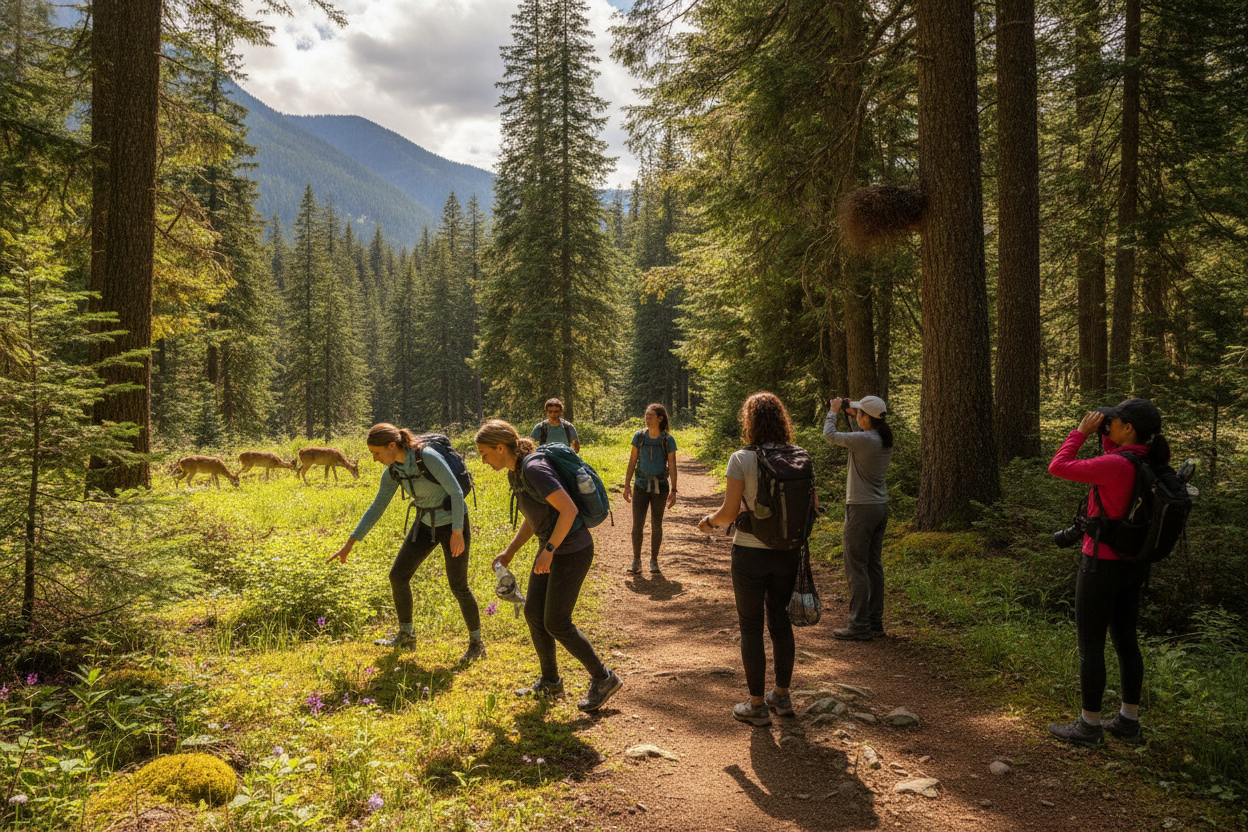
Hikers play a direct role in conservation, even on short outings. Choosing established trails helps protect plants and soils from unnecessary damage. Staying alert near water sources and wildlife habitats also reduces stress on sensitive areas. These choices may feel small, but they matter because popular recreation sites receive repeated use throughout the season.
Another important step is managing waste carefully. Pack out tissues, snack wrappers, and food scraps rather than assuming they will disappear naturally. Keep your distance from animals and avoid feeding them, even casually. Wildlife that becomes used to people can change behavior in ways that are harmful for both animals and visitors. Conservation begins with respect for natural systems and a willingness to leave them undisturbed.
Hikers can also support conservation by learning about the places they visit. Local trail groups, park updates, and restoration projects often share useful information about habitat needs and seasonal closures. The more you understand a landscape, the easier it is to protect it. Conservation is not only a policy issue; it is a daily practice that turns outdoor recreation into responsible stewardship.
Leave a Reply